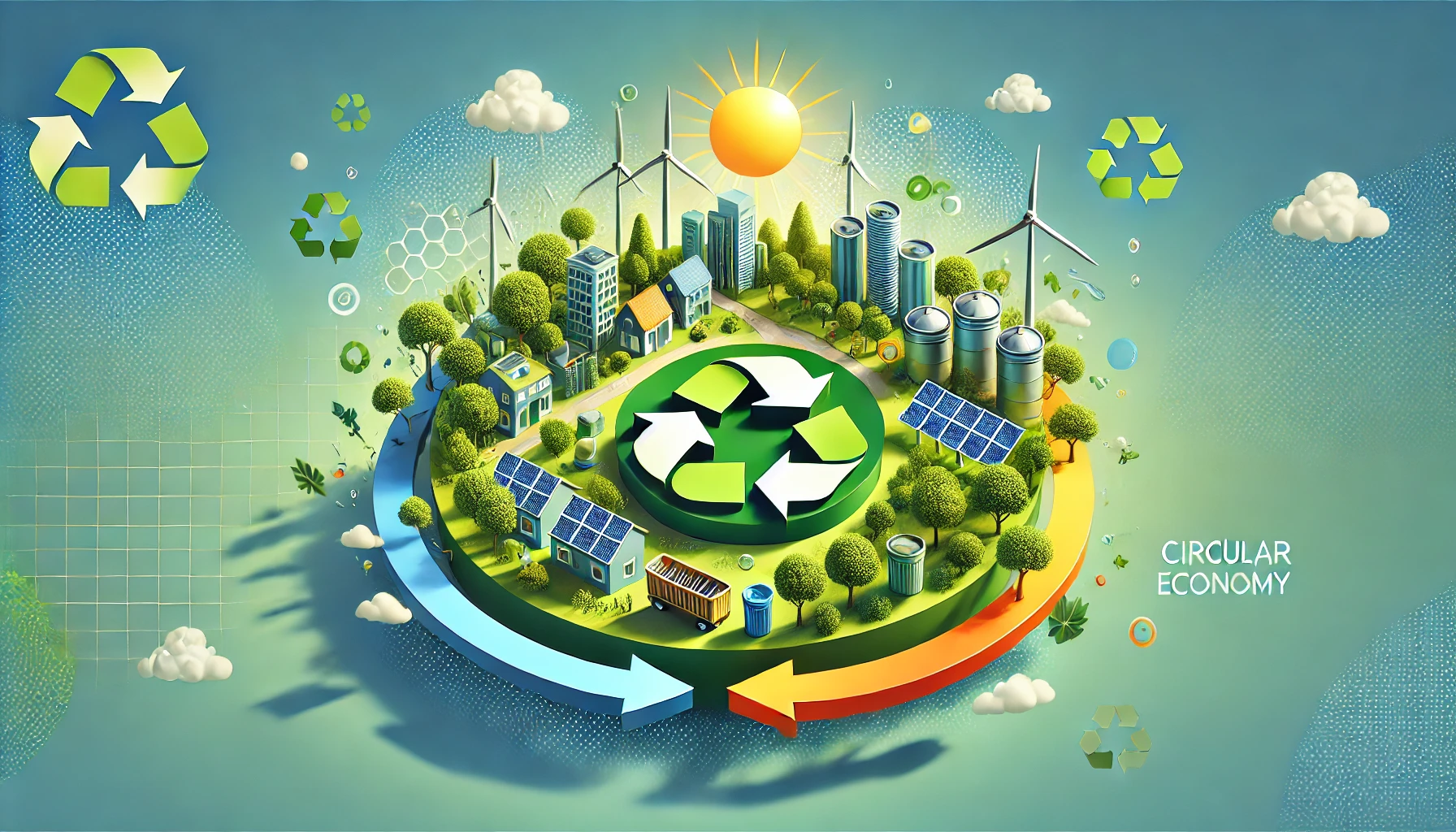
The waste crisis is escalating, with landfills overflowing and natural resources depleting. Circular economies offer a transformative solution by closing resource loops, reducing waste, and fostering innovation. Discover how this sustainable model can reshape industries, protect ecosystems, and ensure a thriving future for all.
SUMMARY
The global waste crisis threatens our environment, economy, and society. A shift to circular economies, which focus on reuse, recycling, and regeneration, can significantly reduce waste and create sustainable growth. Stakeholders, including governments, businesses, and individuals, must unite to reimagine systems for long-term benefits.
CONTEXT
The traditional linear economy follows a “take, make, dispose” model, leading to massive resource extraction, energy use, and waste. Global waste generation is expected to increase by 70% by 2050, with only 9% of materials currently recycled effectively. This approach harms ecosystems, contributes to climate change, and squanders valuable resources.
Circular economies aim to decouple economic growth from resource consumption by closing resource loops. Products are designed for longevity, repairability, and recyclability, while waste is minimised or repurposed. Nations such as the Netherlands aim to achieve a 100% circular economy by 2050, offering a roadmap for broader adoption.
CHALLENGES
- Lack of Awareness and Engagement
- Many individuals and businesses lack understanding of circular principles.
- Cultural habits favour convenience over sustainability.
- Inefficient Waste Management Infrastructure
- Insufficient recycling facilities and inconsistent regulations hinder waste processing.
- Developing countries face greater infrastructural challenges.
- Economic Barriers
- Upfront costs for businesses transitioning to circular systems can be prohibitive.
- Lack of incentives for investing in sustainable solutions.
- Policy Gaps
- Absence of unified global or regional policies supporting circular economies.
- Inconsistent enforcement of environmental laws.
- Technological and Material Limitations
- Lack of advanced materials that are fully recyclable or biodegradable.
- Gaps in technologies for large-scale circular solutions.
GOALS
Short-term Goals:
- Increase public and private awareness of circular economy principles.
- Invest in recycling and waste management infrastructure in key regions.
Long-term Goals:
- Establish policies that mandate circular practices.
- Transition 50% of global industries to circular models by 2040.
- Ensure all products are designed with full lifecycle considerations by 2050.
STAKEHOLDERS
- Governments
- Establish regulatory frameworks and provide incentives for circular practices.
- Businesses and Industry Leaders
- Innovate and redesign products to prioritise durability and recyclability.
- Consumers
- Shift purchasing habits towards sustainable products and services.
- Non-Governmental Organisations (NGOs)
- Advocate for policies and educate communities on sustainable practices.
- Academia and Researchers
- Develop new materials and scalable recycling technologies.
SOLUTION
1. Product Redesign and Innovation
- What it involves: Encourage industries to adopt eco-design principles where products are modular, durable, and easy to repair or recycle. Incentivise innovation in biodegradable materials and closed-loop production systems.
- Challenges addressed: Reduces resource extraction and post-consumer waste.
- Innovation involved: Integration of advanced materials, AI for waste sorting, and blockchain for tracking product lifecycles.
- Scalability: Can be expanded across industries globally with standardised guidelines.
- Cost: Estimated £200 billion globally for R&D and implementation.
2. Advanced Recycling Systems
- What it involves: Establish state-of-the-art facilities capable of handling complex materials such as e-waste and textiles. Use AI for efficient sorting and robotic systems for disassembly.
- Challenges addressed: Increases recycling rates and reduces landfill dependence.
- Innovation involved: Robotics, machine learning, and chemical recycling technologies.
- Scalability: Regional centres of excellence can serve as models for replication worldwide.
- Cost: £150 billion to establish facilities and train workforce globally.
3. Policy and Regulatory Frameworks
- What it involves: Implement laws requiring circular economy practices, such as extended producer responsibility (EPR) and bans on single-use plastics. Establish global trade agreements for recycled materials.
- Challenges addressed: Creates accountability and aligns industries with sustainability goals.
- Innovation involved: Digital platforms for monitoring compliance.
- Scalability: National policies can inform international standards.
- Cost: £50 billion for development, implementation, and enforcement globally.
4. Public Awareness Campaigns
- What it involves: Launch educational campaigns and community programmes to promote sustainable consumption and waste management.
- Challenges addressed: Changes consumer behaviour and increases demand for sustainable products.
- Innovation involved: Use of social media, augmented reality, and gamification to engage audiences.
- Scalability: Can be adapted to diverse cultures and languages.
- Cost: £20 billion for global campaigns over 10 years.
5. Digital Circular Platforms
- What it involves: Create online marketplaces for refurbished goods, materials exchange networks for industries, and apps for waste management.
- Challenges addressed: Reduces waste by facilitating reuse and repair.
- Innovation involved: AI algorithms to match resources, IoT devices for tracking material use.
- Scalability: Platforms can connect local markets globally.
- Cost: £30 billion for development and global rollout.
IMPLEMENTATION
Year 1-2:
- Form global partnerships and pilot projects in high-waste regions.
- Begin public awareness campaigns.
Year 3-5:
- Establish advanced recycling facilities and digital platforms.
- Enact national policies aligned with circular principles.
Year 6-10:
- Scale innovations globally, focus on underserved regions.
- Measure impact and refine approaches based on data.
Resources Required:
- Human: 1 million skilled workers for R&D, recycling, and awareness campaigns.
- Financial: £450 billion over 10 years.
- Technological: AI and IoT integration, advanced recycling machines.
Risk Mitigation:
- Develop contingency funds.
- Collaborate with multiple stakeholders to ensure redundancy in supply chains.
FINANCIALS
| Element | Cost (£ billion) | Funding Sources |
|---|---|---|
| Product Redesign | 200 | Corporate investment, innovation grants |
| Advanced Recycling Systems | 150 | Public-private partnerships (PPPs) |
| Policy and Regulatory Frameworks | 50 | Government budgets, international aid |
| Public Awareness Campaigns | 20 | NGOs, advertising partnerships |
| Digital Circular Platforms | 30 | Tech sector investment, crowdfunding |
Funding Sources:
- Corporate Contributions: Multinational companies funding eco-innovation to meet ESG goals.
- Green Bonds: Governments issuing bonds for environmental projects.
- Crowdfunding Platforms: Engaging individuals in specific initiatives.
- Carbon Credits: Revenues from trading emissions reductions in circular initiatives.
Total Funding Available: £470 billion.
CASE STUDIES
- The Netherlands’ Circular Economy Programme
- Goal to eliminate waste by 2050, focusing on construction, plastics, and agriculture.
- Success: Circularity boosted GDP by 1.8%.
- Ellen MacArthur Foundation
- Promoted circular designs globally, influencing policies and corporate strategies.
IMPACT
Quantitative Outcomes:
- Reduction of global waste by 50% by 2050.
- Economic growth through circular industries contributing £1 trillion annually.
Qualitative Outcomes:
- Improved environmental quality and reduced resource conflicts.
- Enhanced consumer awareness and quality of life.
Metrics to Measure Success:
- Recycling rates, landfill diversion percentages, and reduction in resource extraction.
- Economic gains in circular industries and job creation figures.
CALL TO ACTION
The transition to circular economies is crucial for sustainable growth and environmental resilience. Governments, industries, and individuals must commit to adopting circular principles and investing in innovation. Let’s reshape our world for future generations—starting today.
Leave a Reply